















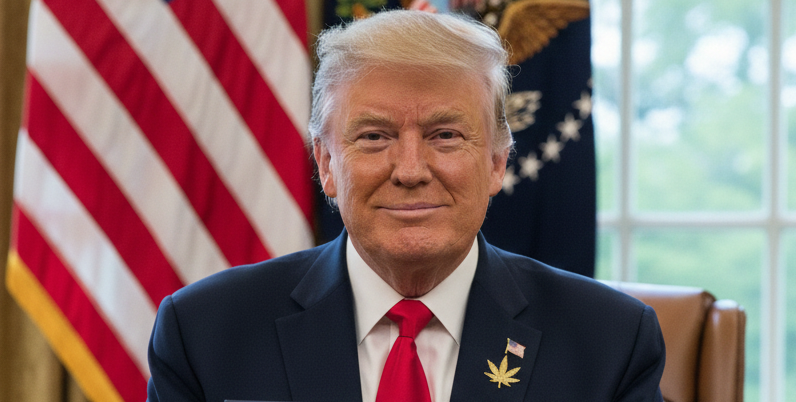
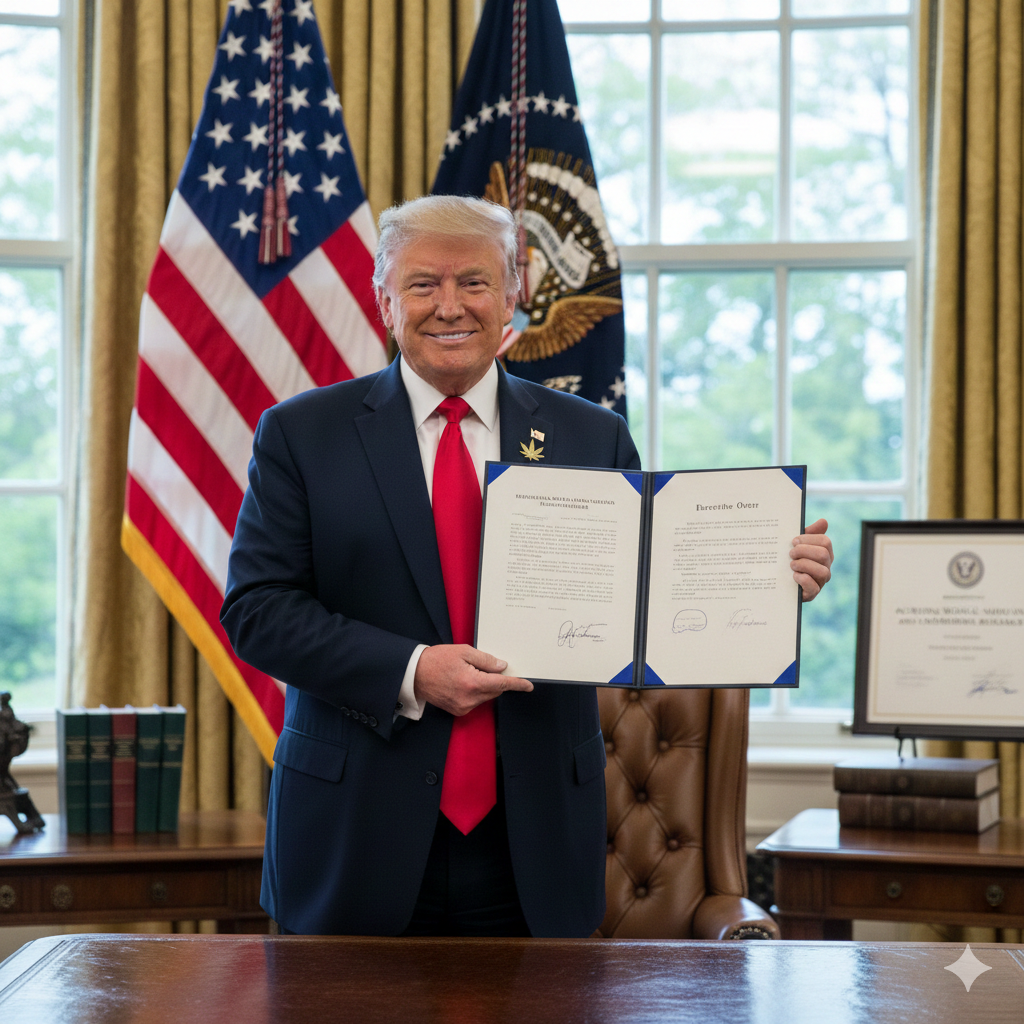
In a move that has sent shockwaves through the legal, medical, and business worlds, President Donald Trump signed a landmark executive order on December 18, 2025, directing the federal government to reclassify marijuana.
Titled “Increasing Medical Marijuana and Cannabidiol Research,” the order instructs the Attorney General and the Department of Justice to “expeditiously” complete the rulemaking process to move cannabis from Schedule I to Schedule III under the Controlled Substances Act (CSA).
For over 50 years, marijuana has sat in the same category as heroin and LSD—defined as having “no currently accepted medical use.” This week’s action signals the end of that era.
What Does the Executive Order Actually Do?
It is important to understand that while the President has issued the directive, the formal reclassification requires a specific administrative process. Here are the core components of the order:
-
Expedited Rescheduling: The Order directs Attorney General Pam Bondi to take all necessary steps to finalize the move to Schedule III.
-
Expansion of Research: By moving out of Schedule I, the intense federal barriers that have historically stifled medical research on cannabis will be significantly lowered.
-
CBD Access for Seniors: The order authorizes a pilot program to explore Medicare reimbursement for certain CBD products, potentially helping millions of seniors manage pain and chronic illness.
-
Hemp-Derived Regulation: It calls for a clearer regulatory framework for hemp-derived cannabinoids, focusing on consumer safety and milligram limits for THC.
Schedule I vs. Schedule III: What’s the Difference?
The shift in “schedules” is more than just a clerical change; it changes the legal definition of the substance.
| Feature | Schedule I (Current) | Schedule III (New Target) |
| Abuse Potential | High | Moderate to Low |
| Medical Value | None (Federally) | Accepted Medical Use |
| Examples | Heroin, LSD, Ecstasy | Ketamine, Anabolic Steroids, Tylenol w/ Codeine |
| Tax Penalty | 280E applies (High taxes) | 280E no longer applies |
The Big Winners: Patients and Businesses
While this order does not federally legalize recreational marijuana, the practical implications are massive.
1. Financial Relief for Small Businesses
One of the biggest hurdles for state-legal cannabis dispensaries has been IRS Code 280E. This rule prevents businesses dealing in Schedule I or II substances from deducting normal business expenses (like rent or payroll) from their taxes. Reclassifying to Schedule III effectively kills the “280E tax penalty,” making these businesses instantly more profitable and stable.
2. Medical Breakthroughs
With the “Schedule I” stigma removed, universities and pharmaceutical companies can more easily conduct clinical trials. This will lead to a better understanding of how cannabis treats conditions like epilepsy, chronic pain, and PTSD.
3. Political “Cover” for States
Lawmakers in states that have been hesitant to legalize—such as Pennsylvania—have already noted that this federal shift provides “political cover” for more conservative representatives to support state-level reform.
Does this mean marijuana is now legal?
No. It is vital to note that marijuana remains a controlled substance. Recreational use is still federally illegal, and existing workplace drug-testing policies (especially for safety-sensitive roles like pilots or truck drivers) remain in effect for now.
During the signing ceremony in the Oval Office, President Trump described the move as “common sense,” noting that “millions of Americans” have long recognized the medical utility of the plant.
This action represents one of the most significant shifts in American drug policy in decades, bridging a gap between federal law and the 38 states that have already legalized some form of medical or adult-use cannabis.
by Matt J. Doyle
eZWay Network
MattJDoyle.Com